

Introduction
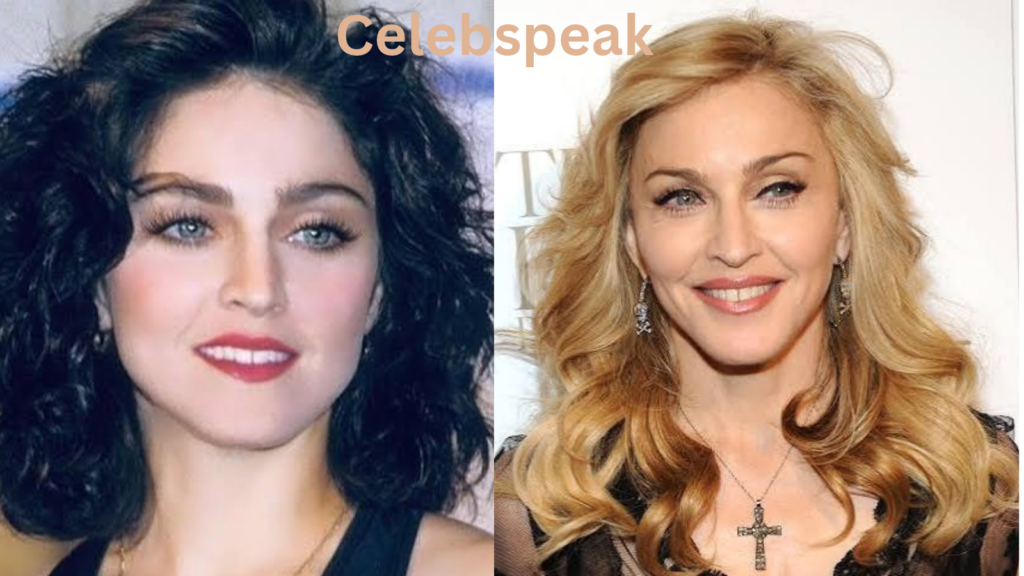
When people search for Madonna young, they are often looking for more than old photographs. They want to understand what Madonna Louise Ciccone was like before she became one of the most recognizable pop stars in music history.
Long before the famous costumes, controversial videos, sold-out tours, and No. 1 records, Madonna was a determined girl growing up in Michigan. Her childhood, Catholic upbringing, early interest in dance, and decision to leave college and move to New York all played important roles in shaping the performer she would become.
Her rise was not overnight. Madonna spent years learning how to dance, perform, write, promote herself, and survive in a difficult entertainment industry. Looking at Madonna young gives readers a clearer picture of how those early experiences helped create her distinctive artistic identity.
Madonna Young: Childhood in Michigan
Madonna was born on August 16, 1958, in Bay City, Michigan. Her full name is Madonna Louise Veronica Ciccone, and she was the third of six children born to Silvio “Tony” Ciccone and Madonna Fortin. Her father worked as an engineer, while her mother had previously worked as an X-ray technician and had a background in dance.
The family later lived in the Detroit-area community of Pontiac. Madonna grew up in a traditional Catholic household, and religion became a major part of her early environment.
Catholic symbols and traditions would eventually appear throughout her music, performances, videos, and visual art. That connection was not something she invented after becoming famous; it was rooted in the world she knew as a child.
Her childhood changed dramatically when her mother died of breast cancer on December 1, 1963. Madonna was only five years old.
The loss became one of the most important experiences of her early life. Madonna later spoke about how losing her mother affected her personality, independence, and desire to make herself heard.
After her father’s second marriage, Madonna also had to adjust to life with a stepmother and several siblings. According to biographical accounts, she disliked some of the responsibilities placed on her at home and developed a strong desire to create a different life for herself.
Madonna Young and Her Love of Dance
Dance became an important outlet for Madonna while she was still young.
At school, she developed a reputation as a hardworking and ambitious student. She also became involved in cheerleading and dance, showing the discipline that would later become essential to her stage performances.
Her talent eventually attracted the attention of the University of Michigan. In 1976, the university offered her a full scholarship to its dance program.
For a teenager from Michigan, the opportunity was significant. Madonna had a chance to receive formal training while studying at a respected university.
But she did not remain in college for the traditional four-year path.
In 1977, she received a six-week scholarship to study with the Alvin Ailey American Dance Theater in New York. She later had an opportunity to perform with choreographer Pearl Lang. These experiences brought her closer to the professional dance world and exposed her to the possibilities of life in New York City.
Why Madonna Left College
Madonna spent about two years at the University of Michigan before making a decision that changed her life.
She left college and moved to New York City in 1978 to pursue dance professionally. It was a risky choice because she did not have the security of a major recording contract or a guaranteed career waiting for her.
Her move reflected a pattern that would become familiar throughout her career: Madonna was willing to take significant risks when she believed they could move her closer to her goals.
Grammy’s biography of Madonna notes that she arrived in New York in 1978 with only $35.
That detail captures how far she was from the superstar image that would eventually surround her.
New York gave Madonna access to dancers, musicians, clubs, choreographers, artists, and performers. It also forced her to learn how to survive independently.
The Struggling Young Madonna in New York
Madonna’s early New York years were difficult.
She worked various jobs while trying to build a career in dance and music. Biographical accounts report that she worked at places including the Russian Tea Room and took other jobs to pay her expenses. She also worked as an art model and performed wherever opportunities appeared.
This period matters because Madonna was not simply waiting to be discovered.
She was actively experimenting with different forms of performance. She danced, sang, joined bands, developed contacts, and studied the downtown music scene.
The Rock & Roll Hall of Fame’s archival collection on Madonna includes material from 1979 to 1981, including early demo recordings that were circulated to New York bars and clubs before she signed with a record label.
Those early recordings show that the road to fame involved years of preparation and experimentation.
From Dancer to Singer
Madonna initially came to New York because of dance, but music gradually became the center of her ambition.
She joined the Breakfast Club, a band connected to Dan Gilroy, and later became its lead singer. She also formed and worked with other groups while developing her own musical style.
During these years, she discovered that singing allowed her to combine several talents at once.
She could perform, dance, create a visual identity, and communicate directly with an audience. That combination would eventually become one of the defining features of her career.
By 1981, Madonna decided to pursue a solo career.
She worked with manager Camille Barbone and began pushing her recordings to influential figures in New York’s club and music scene. Her persistence eventually helped her secure a deal with Sire Records.
Madonna Young Before Fame: The 1982 Breakthrough
Madonna’s first major breakthrough came with “Everybody.”
The song became a dance-club success in 1982 and helped establish her name beyond the local New York scene. It also demonstrated an important part of her strategy: she understood the value of dance music and knew how to present herself visually.
At this stage, Madonna was still far from the global celebrity audiences would later know.
She had not yet released her best-known albums. She had not become an MTV phenomenon. She was simply a young performer trying to turn club attention into a sustainable career.
Her self-titled debut album arrived in 1983.
The album included songs such as “Holiday,” “Lucky Star,” “Borderline,” and “Burning Up.” The Rock & Roll Hall of Fame describes the record as an important early example of Madonna’s dance-pop sound.
The Young Madonna Look
One of the most interesting parts of studying Madonna young is seeing how quickly her visual identity developed.
She did not rely on traditional glamour alone. Instead, she mixed lace, layered jewelry, crucifix necklaces, gloves, skirts, leggings, and other pieces into a look that felt connected to downtown New York street culture.
Her appearance became almost as recognizable as her songs.
Young fans began copying her clothes and accessories. This helped create a relationship between music, fashion, and celebrity that became central to Madonna’s brand.
The Rock & Roll Hall of Fame has described her career as one that combined music with fashion, videos, performance, and media awareness.
That combination was especially powerful during the early MTV era.
Madonna’s Transformation Into a Pop Star
Madonna’s second album changed the scale of her career.
Released in 1984, Like a Virgin produced several major hits and became her first No. 1 album in the United States. Grammy notes that the title track became her first Billboard Hot 100 chart-topper.
The album also included “Material Girl,” which became closely associated with Madonna’s public image.
Her 1984 MTV Video Music Awards performance of “Like a Virgin” became another defining moment. Madonna performed in a wedding-inspired outfit while descending from a large wedding cake. When one of her shoes slipped, she improvised rather than stopping the performance.
The incident helped turn the performance into a major piece of early MTV history.
At only 26, Madonna had already learned something that would remain important throughout her career: live performance could create a story that audiences remembered long after a song ended.
Key Facts About Madonna Young
| Detail | Information |
|---|---|
| Full name | Madonna Louise Veronica Ciccone |
| Birth date | August 16, 1958 |
| Birthplace | Bay City, Michigan |
| Childhood area | Michigan, including the Detroit-area region |
| Family | Third of six children |
| Early passion | Dance |
| University | University of Michigan |
| Moved to New York | 1978 |
| First major club breakthrough | “Everybody” |
| Debut album | Madonna |
| Debut album release | 1983 |
| Major early breakthrough | Like a Virgin |
| Rock & Roll Hall of Fame | Inducted in 2008 |
The basic timeline shows that Madonna’s transformation took place over many years rather than in a single moment.
How Her Early Life Shaped Her Art
Madonna’s childhood and early adulthood gave her several themes that later appeared in her work.
Religion was one. Growing up Catholic gave her a deep familiarity with religious imagery, rituals, symbols, and language. She later used those elements in ways that often challenged conventional expectations.
Independence was another.
Losing her mother at five, leaving Michigan for New York, dropping out of college, and surviving without a guaranteed career all contributed to a life built around self-direction. Her later public image emphasized control, reinvention, and personal freedom.
Dance also remained central.
Even after Madonna became famous as a singer, her concerts continued to depend heavily on choreography. Her background as a dancer helped her think about music as a complete visual and physical performance rather than simply something delivered through a microphone.
The Rock & Roll Hall of Fame credits her with helping expand the possibilities of pop performance through music, fashion, videos, and live shows.
Young Madonna’s Influence on Pop Culture
Madonna’s early career arrived at an important time for popular music.
MTV was changing how audiences discovered artists. Music videos could now influence fashion, storytelling, and celebrity image almost as strongly as radio.
Madonna understood that opportunity exceptionally well.
Her early videos did not simply advertise songs. They helped establish characters, styles, attitudes, and visual themes. That approach became a blueprint for many later pop performers.
The Rock & Roll Hall of Fame identifies artists including Lady Gaga, Beyoncé, Katy Perry, Britney Spears, Christina Aguilera, Rihanna, Nicki Minaj, and Sabrina Carpenter among performers influenced by Madonna’s work.
Her influence therefore goes beyond individual songs.
She helped demonstrate how a pop performer could build a complete artistic identity around music, fashion, choreography, visual storytelling, and public image.
Madonna’s Early Music Still Matters
It can be easy to view Madonna’s early work only through the lens of nostalgia.
But her first albums remain important because they show how quickly she developed a recognizable musical personality.
Her 1983 debut combined dance rhythms with accessible pop songwriting. Songs such as “Holiday,” “Lucky Star,” and “Borderline” established a foundation that she would repeatedly reinvent.
Then Like a Virgin expanded that foundation.
The album demonstrated that Madonna could move from promising dance-pop newcomer to international mainstream star without abandoning her distinctive personality.
That ability to evolve became one of the most consistent elements of her career.
Madonna Young vs. Madonna the Superstar
Comparing young Madonna with the established star reveals an important difference: the young Madonna was still building the tools that later made her famous.
| Young Madonna | Established Madonna |
|---|---|
| Focused heavily on dance | Combined dance with large-scale stage production |
| Performed in clubs and small venues | Headlined major international tours |
| Worked different jobs | Built a global entertainment career |
| Developed her visual style | Used fashion as a major part of her artistic identity |
| Experimented with bands | Became a solo recording artist |
| Relied on determination and networking | Controlled major aspects of her creative and business career |
The transformation was gradual.
The young woman who arrived in New York with limited money became a performer capable of working across music, film, fashion, books, and live entertainment.
Why People Still Search for Madonna Young
Interest in Madonna young remains strong because photographs and videos from her early years reveal a different stage of her life.
They show a performer before decades of fame changed public expectations around her.
For longtime fans, early Madonna represents the beginning of an era. For younger audiences, those images can explain why her style had such a strong effect on pop culture.
Her story also appeals to people interested in the practical side of celebrity success. She did not begin with a major platform. She developed her skills, moved to a new city, built connections, accepted difficult jobs, and kept performing until the opportunities became larger.
That journey provides useful context for understanding the artist rather than simply admiring the celebrity image.
Frequently Asked Questions About Madonna Young
1. Where was Madonna born?
Madonna was born in Bay City, Michigan, on August 16, 1958. She grew up in Michigan and later moved to New York City to pursue dance and music.
2. What was Madonna interested in when she was young?
Dance became one of Madonna’s strongest interests during her youth. Her talent led to a scholarship at the University of Michigan and later opportunities to study and perform in New York.
3. When did Madonna move to New York?
Madonna moved to New York City in 1978 after leaving the University of Michigan. She moved there to pursue a professional career in dance and eventually shifted her focus toward music.
4. What was Madonna’s first major hit?
“Everybody” became an important early breakthrough for Madonna in 1982. The song reached No. 1 on the U.S. dance chart and helped her secure the momentum needed to record her debut album.
5. How old was Madonna when she became famous?
Madonna was in her mid-20s when she moved from rising club performer to mainstream pop star. Her self-titled debut arrived in 1983, followed by the much larger breakthrough of Like a Virgin in 1984.
Conclusion
The story of Madonna young is really the story of a performer learning how to turn ambition into a career. Her Michigan childhood, the loss of her mother, formal dance training, decision to leave college, move to New York, early band work, and first recordings all helped shape the artist audiences would later recognize around the world.
Madonna’s early years also explain why reinvention became such a central part of her career. Before she was a global pop star, she was a young dancer and musician willing to take risks, work difficult jobs, and create opportunities for herself.
That early determination became one of the foundations of her remarkable career and helps explain why her influence on pop music, fashion, performance, and visual culture has lasted for decades.
Read mode : Jon Watts: From Indie Filmmaker to Spider-Man Director