

Introduction
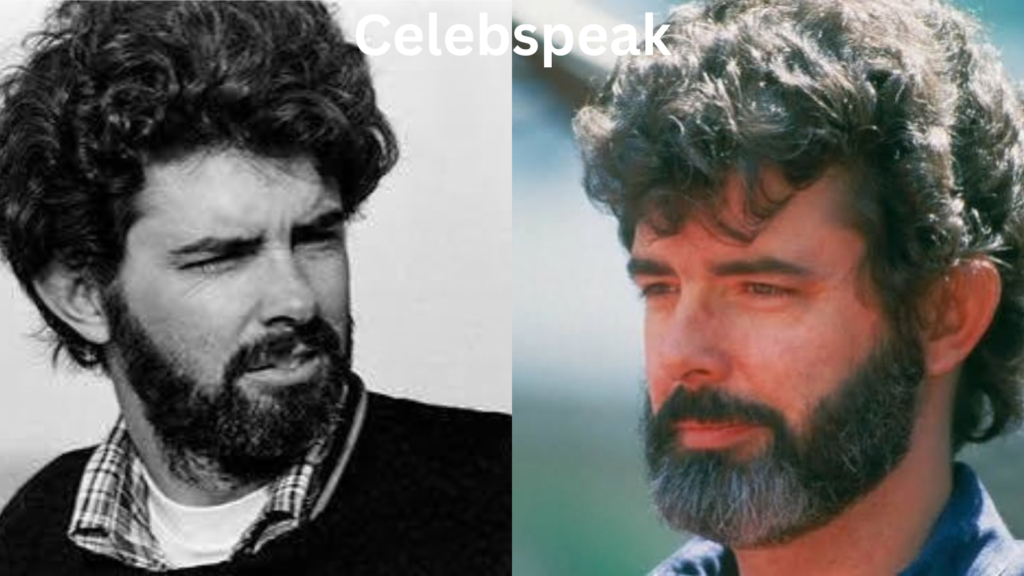
Before George Lucas created Star Wars and became one of the most influential filmmakers in modern cinema, he was a young man from Modesto, California, fascinated by cars, movies, music, and technology. The story of young George Lucas is not simply about a future Hollywood success. It is about how ordinary teenage interests slowly became the foundation for an extraordinary filmmaking career.
Lucas grew up in California’s Central Valley during a period when television, automobiles, rock music, and popular entertainment were changing American culture. His teenage years, especially his interest in hot rods and cruising, later became the creative foundation for American Graffiti.
His path eventually led him to the University of Southern California, where he developed his filmmaking skills, experimented with visual storytelling, and became part of a generation of young directors who wanted to challenge traditional Hollywood methods. USC records show that Lucas graduated from its cinema program in 1966 and won a major student-film award the following year for Electronic Labyrinth: THX 1138 4EB.
Understanding young George Lucas helps explain why his later films placed such importance on visual effects, sound, technology, youth culture, and independent filmmaking.
Young George Lucas and His Modesto Childhood
George Lucas was born on May 14, 1944, and spent his childhood and teenage years in Modesto, California. At the time, Modesto was far removed from the glamour of Hollywood. It was a Central Valley community where cars and local social life played an important role in the lives of teenagers.
Lucas later drew heavily from this environment. Lucasfilm describes American Graffiti as a film inspired by his adolescence in Modesto, particularly the teenage culture of cruising, hot rods, music, and small-town life.
That connection is important because American Graffiti was not simply a fictional story that Lucas invented from scratch. Many of its feelings and details came from experiences he understood personally.
The young Lucas spent considerable time around cars and became interested in the culture surrounding them. This interest would remain important throughout his life, even as filmmaking eventually became his main creative focus.
Cars Were a Major Part of His Youth
Cars were more than transportation for many American teenagers in the 1950s and early 1960s. They represented independence, identity, friendship, and freedom.
Lucas experienced that culture firsthand. His later film American Graffiti would recreate the atmosphere of teenagers driving through town at night, listening to music, meeting friends, and thinking about what would come next.
Lucasfilm’s historical material specifically connects the movie to Lucas’s youth in California’s Central Valley. The filmmaker’s teenage experiences became a major creative resource rather than something he simply left behind when he entered the film business.
This is one of the clearest examples of how young George Lucas influenced the filmmaker he eventually became.
The Young George Lucas Who Loved Movies and Visual Storytelling
Although cars were important, Lucas’s interests eventually expanded toward filmmaking and visual storytelling.
One of his early influences was Walt Disney. Lucasfilm has noted that when Lucas was 11 years old, he visited Disneyland and encountered a world built around adventure, fantasy, history, science, and imagination. Later, as a teenager, he also toured the Disney Studios lot at age 17.
Those experiences mattered because Lucas became interested in the idea that entertainment could create complete worlds for audiences.
Disney’s influence can be seen in some of Lucas’s later ambitions. He did not think of movies merely as individual stories. He became interested in creating large fictional environments supported by visual design, sound, technology, characters, and merchandise.
That approach would eventually become one of the defining features of Star Wars.
From Cars to Cinema
Lucas did not immediately follow a straight path toward becoming a filmmaker.
His early interests included photography, cars, and visual art. He eventually discovered that filmmaking could bring several of those interests together.
A camera could capture movement. Editing could control rhythm. Sound could create atmosphere. Cars could become part of a story. Photography could shape the way an audience experienced a scene.
That combination gave Lucas a creative language that suited his interests.
His later work would repeatedly combine technology with storytelling. But the foundation for that approach developed before he became famous.
Young George Lucas at USC
A major turning point came when Lucas entered the cinema program at the University of Southern California.
USC became an important part of his development as a filmmaker. He graduated from the cinema program in 1966, and the university lists him among its notable alumni.
At USC, Lucas was surrounded by other young filmmakers who were experimenting with new approaches to cinema. The school provided access to filmmaking equipment, production classes, fellow students, instructors, and an environment where ambitious ideas could be tested.
USC’s history notes that the low-cost Super 8mm camera, introduced in 1965, helped make practical filmmaking more accessible to students. The university’s production courses became a training ground for Lucas and other future filmmakers.
For Lucas, film school was not simply about studying movies. It was a place where he could actually make them.
His Student Films
One of Lucas’s most important early projects was Electronic Labyrinth: THX 1138 4EB.
The futuristic short explored themes that would later appear in Lucas’s feature film THX 1138. USC records show that Lucas won the National Student Film Festival award for the film in 1967.
The project demonstrated that Lucas was already developing a distinctive interest in futuristic environments, technology, controlled societies, and visual experimentation.
His early work also showed an ability to take ideas that might have seemed difficult to film and turn them into visual experiences.
This was an important step toward the filmmaker he would become.
Why Film School Mattered to Lucas
Lucas’s time at USC also introduced him to other young filmmakers who would become important figures in American cinema.
Among his contemporaries was Walter Murch, who later became a respected editor and sound designer. Lucas and Murch met as film students at USC in 1965 and later worked together on projects including THX 1138 and American Graffiti.
The relationships Lucas formed during this period were valuable because filmmaking is rarely a completely solitary profession.
A director needs cinematographers, editors, writers, sound designers, actors, producers, and technicians. Lucas’s USC years helped him develop both his filmmaking skills and the professional relationships that supported his early career.
George Lucas and Francis Ford Coppola
Another major influence on the young filmmaker was Francis Ford Coppola.
Lucas became part of a group of filmmakers working outside the traditional studio system. Coppola’s American Zoetrope studio in San Francisco became an important creative environment for Lucas and other filmmakers during the late 1960s.
Lucas worked with Coppola on the feature version of THX 1138.
The relationship also exposed Lucas to the practical realities of making movies with limited resources. Instead of waiting for a large Hollywood studio to give him complete creative freedom, he increasingly looked for ways to make his own projects.
That independent mindset became central to his career.
THX 1138: The First Major Step
Lucas directed THX 1138 as his feature-film debut, following the earlier student version he had made at USC.
The film presented a stark futuristic society and explored themes involving technology, conformity, control, and individual freedom. It was very different from the nostalgic teenage world that Lucas would later create in American Graffiti.
Yet both films revealed the same filmmaker’s interest in environments.
In THX 1138, the environment was futuristic and controlled. In American Graffiti, it was a small California town filled with cars, music, and teenagers.
Lucas was learning how setting could become part of the story itself.
Young George Lucas and American Graffiti
The biggest breakthrough before Star Wars came with American Graffiti.
Released in 1973, the movie followed several teenagers during one night in a California town. The story focused on friendship, relationships, uncertainty, cars, music, and the transition from adolescence into adulthood.
Lucas based much of the film’s atmosphere on his own youth in Modesto.
That personal connection gave the movie an unusual sense of authenticity. Instead of creating teenage characters from a distance, Lucas understood the culture he was depicting.
The film also demonstrated his ability to use music as an essential storytelling element. Lucas had collected 45 rpm records during his youth and used that knowledge when selecting music for the movie. Lucasfilm notes that the soundtrack became a major part of the film’s identity.
The Making of American Graffiti
Production was not easy.
Lucasfilm reports that the film was made on a budget of roughly $700,000 and was shot largely at night in Northern California during the summer of 1972. Production faced location problems, difficult lighting conditions, and other challenges.
Lucas and his collaborators nevertheless completed the movie.
The result became a major commercial success and helped establish Lucasfilm as a serious independent filmmaking company. The success also gave Lucas the financial and professional position he needed to pursue his next major idea.
That next idea was Star Wars.
How Young George Lucas Shaped Star Wars
It is easy to think of Star Wars as a completely separate creation from Lucas’s earlier life.
However, many elements of his young adulthood helped shape the franchise.
His interest in cars became an interest in machines, movement, and mechanical design. His fascination with Disney helped demonstrate the power of immersive worlds. His USC education encouraged experimentation with film technology. His work on THX 1138 developed his interest in science fiction.
His experience with American Graffiti also taught him how music, editing, characters, and visual atmosphere could work together.
Even one famous Star Wars name has an unexpected connection to his earlier work. During sound work on American Graffiti, Walter Murch referred to a reel and dialogue track as “R2D2.” Lucas liked the sound of the name and later developed the famous robot character around it.
The story illustrates how Lucas often transformed small creative discoveries into larger ideas.
From Independent Filmmaker to Lucasfilm Founder
Lucas incorporated Lucasfilm in 1971 as a way to support his future projects.
At that point, he was not yet the global entertainment figure audiences would later recognize. Lucasfilm itself was initially little more than a newly established company intended to give the filmmaker greater independence.
The success of American Graffiti changed the company’s position.
Lucas could now use the film’s success to develop larger projects and invest in the technology needed to make them.
This was especially important because Star Wars required visual effects that were beyond what many existing filmmaking facilities could easily provide.
The Early Technology Behind Lucas’s Vision
Lucas’s interest in technology became one of the defining features of his career.
When he prepared to make Star Wars, Lucasfilm established Industrial Light & Magic in 1975 to handle the film’s visual effects. The company also developed new approaches to sound and post-production.
The young filmmaker who had experimented with student cameras at USC was now building specialized filmmaking infrastructure.
That progression shows why his early career matters. His later innovations did not appear suddenly after Star Wars became successful. They developed from years of experimentation.
Key Stages in Young George Lucas’s Development
| Period | Important Development |
|---|---|
| Childhood | Grew up in Modesto, California |
| Teenage years | Developed strong interests in cars and youth culture |
| Age 11 | Visited Disneyland and encountered its immersive world of fantasy and technology |
| Age 17 | Visited the Disney Studios lot |
| 1960s | Studied cinema at USC |
| 1966 | Graduated from USC’s cinema program |
| 1967 | Won a National Student Film Festival award for Electronic Labyrinth: THX 1138 4EB |
| 1971 | Released THX 1138 and incorporated Lucasfilm |
| 1973 | Released American Graffiti |
| 1975 | Established Industrial Light & Magic for Star Wars |
| 1977 | Star Wars became a worldwide phenomenon |
These milestones show a gradual progression rather than an overnight transformation.
What Made Lucas’s Early Career Different?
Several characteristics stand out when looking at Lucas’s early development.
He Used Personal Experiences
Lucas did not ignore his youth once he became a professional filmmaker. He turned his memories of Modesto into the foundation of American Graffiti.
He Experimented Early
His student films were opportunities to test visual ideas rather than simply fulfill academic requirements. Electronic Labyrinth eventually became a foundation for THX 1138.
He Worked With Other Young Filmmakers
His relationships with people such as Walter Murch and Francis Ford Coppola helped him develop professionally and creatively.
He Looked Beyond Traditional Hollywood
Lucas increasingly wanted creative independence. Establishing Lucasfilm allowed him to develop projects outside the conventional studio structure.
He Treated Technology as Part of Storytelling
Rather than viewing technology only as a production tool, Lucas became interested in how cameras, editing, sound, and visual effects could expand what filmmakers were able to show.
Young George Lucas: Frequently Asked Questions
What was George Lucas like when he was young?
Young George Lucas developed strong interests in cars, movies, photography, visual art, and popular culture. His teenage experiences in Modesto later influenced American Graffiti, while his interest in imaginative worlds was influenced in part by experiences such as visiting Disneyland.
Where did George Lucas study filmmaking?
Lucas studied cinema at the University of Southern California. He graduated from USC’s cinema program in 1966, and the university identifies him as one of its notable alumni.
What was George Lucas’s first feature film?
THX 1138, released in 1971, was Lucas’s first feature film as a director. The project developed from his earlier USC student film, Electronic Labyrinth: THX 1138 4EB.
Did George Lucas base American Graffiti on his own life?
Yes. American Graffiti was strongly inspired by Lucas’s adolescence in Modesto and the car-centered teenage culture he experienced while growing up in California.
How did Lucas’s early films lead to Star Wars?
His early projects gave him experience with science fiction, visual experimentation, independent production, editing, sound, and youth-oriented storytelling. The success of American Graffiti also helped provide the professional and financial foundation for Lucas to pursue his ambitious space-fantasy project.
Conclusion
The story of young George Lucas is a story of interests gradually becoming a career. His childhood in Modesto introduced him to the culture of cars and teenage life, while his encounters with Disney and his education at USC expanded his understanding of visual storytelling.
His student films gave him a place to experiment, THX 1138 introduced his ideas to a wider audience, and American Graffiti transformed memories of his youth into a successful feature film. Those experiences prepared him for the enormous creative challenge of Star Wars.
Looking back at young George Lucas makes one thing clear: the filmmaker behind one of cinema’s most recognizable franchises did not emerge fully formed. His later achievements grew from years of curiosity, experimentation, collaboration, and a willingness to turn personal interests into stories.
Read mode : Nicole Kidman Children: Meet Her 4 Kids